
Category: Disc

  • Stabbing Back Pain and Leg Pain with Herniated Disc Helped by Chiropractic

    Stabbing Back Pain and Leg Pain with Herniated Disc Helped by Chiropractic

    The second quarter 2025 issue of the Asian-Pacific Chiropractic Journal published the results of a case study documenting the resolution of symptoms under chiropractic care of a patient who suffered a fall resulting in stabbing back pain, leg pain, and side pain.

    This case involved a 36-year-old woman who suffered a fall while hiking. Within 24 hours of her fall, she began having symptoms which continued to get worse for the next 14 months before she decided to visit a chiropractor.

    At the time of her chiropractic visit, the woman reported that she was suffering with severe, constant, bilateral heaviness and squeezing pain in both her legs. She had visible swelling in both lower legs with the right leg being significantly worse. The woman also reported sharp low back pain and right lower leg pain between her knee and ankle. The severity of her symptoms was affecting her ability to stand, walk, exercise, sleep and work as a teacher. She rated her pains as a 7 out of 10.

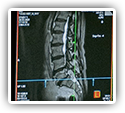
    Prior to seeking chiropractic care, the woman was seen by a general practitioner and a neurologist who ordered an MRI. The results of the MRI revealed two herniated discs between her fourth and fifth lumbar vertebrae, and the fifth lumbar and her sacrum. Physical therapy and a compression sock did not help the woman as her symptoms continued to get worse.

    Upon her very first visit to a chiropractor, a consultation and examination were performed. The examination included a posture analysis, spinal palpation, a spinal range of motion analysis, as well as some orthopedic and neurological testing.

    Specific forms of chiropractic adjustments were started to address the subluxation complexes that were determined to be present. On the second visit, the woman reported that she was able to move more comfortably and had less pressure in her right lower leg. She also reported that her leg swelling had started to decrease.

    On the third chiropractic visit, the woman stated that she was able start recreational cycling again. On the forth visit, she reported that she was able to sleep through the night without difficulty. On her fifth visit, she said that she felt a sense of stability while standing and walking. The woman steadily improved as chiropractic care continued. After eight months of care, the woman reported that all activities of her daily life had returned to normal.
  • Subluxation Associated with a Wide Variety of Spinal Problems According to MRI Review Study

    Subluxation Associated with a Wide Variety of Spinal Problems According to MRI Review Study

    The Annals of Vertebral Subluxation Research published the results of a retrospective study on August 1, 2021, showing that vertebral subluxations are associated with a wide variety of spinal issues according to MRI studies. A retrospective study is when a large number of previous cases and studies of similar content are reviewed and published in one overview paper.

    The purpose of this study was to determine the prevalence of abnormal findings associated with subluxations according to MRI studies. Many people do not understand that subluxations are actually a variety of spinal issues that have several components in common. One component is that the subluxated vertebrae is malpositioned. Another component is that there is some form of interference to the nervous system from this malposition.

    In addition to these two factors, many other changes can be occurring to the vertebrae and surrounding tissue due to the subluxations. In many cases, these additional changes are called component parts. This study was designed to see the frequency and variety of changes associated with subluxations as confirmed by MRI studies.

    In this study, 737 cases were referred for review of chiropractic patients who had also had MRI studies of their spines. The reports on these cases consisted of 325 cervical, 11 thoracic, 361 lumbar, and 40 extremity MRI reports.

    The results showed that of the 325 neck (cervical spine) MRIs associated with subluxations, 91% showed spinal abnormalities. Only 28 of the 325 had no abnormalities observed. Included in the 91% were 174 cases of alterations of spinal curvatures. Additionally,113 (35%) showed disc degeneration with 21 (17%) showing boney growth called osteophytes.

    Although the sample size of cases with MRI in the mid-back (thoracic) was much smaller, there was a lower but still significant prevalence of abnormalities present in this area of the spine as seen on MRI studies.

    Cases involving MRI in the lower back (lumbar) showed that of the 361 case reports, 89% showed spinal abnormalities. Disc degeneration was the largest number of abnormalities seen the lumbar spine with 251 of the 361 showing this condition. Although a fair number showed curvature changes, the researchers pointed out that subjects in this study were lying down on their backs which would cause changes to spinal curvatures.

    In the study conclusion the authors noted that “Degenerative and other changes in the spine may be associated with vertebral subluxations. Vertebral subluxations are changes in the position or motion of a vertebra, which result in the interference of nerve function.” They also stated, “There was a high prevalence of abnormalities disclosed by MRI in this cohort. Clinically significant abnormalities may exist regardless of the presence or absence of pain.”